
Data from New Zealand’s Ministry of Education revealed that approximately 25% of students were either moderately or chronically absent during the third term of the previous school year. Many factors may affect this, but one of the most common is health-related absences, which were said to have doubled recently. (1)
Sadly, hygiene in educational facilities plays a major role in this. Since these are bustling hubs of activity, schools would be a breeding ground for germs and bacteria. According to assistant professor of clinical paediatrics at Yale School of Medicine, Leslie Sude, MD: “There are a lot of close interactions between people, and oftentimes a lot of sharing of objects which makes it easy for viruses to spread.” This can be a challenge for educational facilities. (2)
Many health-related absences can be reduced with proper disinfection protocols and a comprehensive cleaning process in place. When cleaning education facilities, there are key areas that you should focus on.
High Foot-Traffic Areas
The first areas to be paid attention to are high-traffic areas. These are entrances, hallways, and elevators, which are used in constant flow all day longand thus require thorough and regular professional cleaning.
Managing the cleaning schedule for these places is essential. Since these areas have to be cleaned multiple times rather than at the end of the day, it may involve quick cleanups at different intervals during class change or lunch breaks. Heavy-duty mats at entranceways can catch dirt and moisture, so they need to be vacuumed or shaken out regularly.
In corridors and elevators, sweeping and mopping should take place more frequently to catch dirt before it can collect. Since visitors who come into the buildings are very often first greeted by this area, keeping it clean will help maintain a good image for the education facility.
Classrooms and Lecture Halls
Moving on to the heart of any educational facility: the classrooms and lecture halls. These spaces, whether they’re small rooms in a primary school or large university lecture theatres, require thorough and regular professional cleaning.
When cleaning these areas, pay special attention to desks, chairs, computers, and projectors. These items are touched frequently and can harbour germs if not cleaned properly. Use appropriate cleaning solutions for electronic equipment to avoid damage.
Examples of appropriate sustainable cleaning solutions include:
- Cleaning products packaged in recyclable materials – this contributes to reducing the environmental impact associated with the production and disposal of cleaning products
- Bamboo cloths instead of microfibre cloths – reducing emissions by minimising micro plastic pollution in waterways
- Using battery powered machines to reduce energy usage and thus fuel related emissions associated with cleaning activities
- Autonomous devices, such as a robot, to perform routine cleaning tasks, significantly improving operational efficiency
Lastly, don’t forget about less obvious areas like light switches, doorknobs, and window sills. These are often overlooked but can be hotspots for germs. The goal is to create a clean and healthy learning environment where students can focus on their studies without distraction or health concerns.
Common Areas and Student Lounges
In the common areas, with all the varied activities that take place, all manner of rubbish can be picked up. There’s a spill of food, waste paper, and more. These places require constant sweeping, mopping, and waste clearance.
Adopt the use of eco-friendly cleaning products. Using green products gives students assurance that the education provider cares about their well-being and that of the environment, too. Again, most products contain fewer severe chemicals, making the entire place safer when frequently used in populated areas.
Library and Study Areas
The real challenge in keeping libraries and study areas clean without disturbing students requires some creativity and innovative equipment. The job name seems to be quiet cleaning. Vacuum cleaners with low noise ratings or newer technologies—those robotic cleaners working independently with minimal disturbance—can be used.
Remember books and bookshelves. Regular dusting is important for cleanliness and preservation. Use proper dusting tools that trap the dust rather than spreading it. Study carrels and computer workstations must also be wiped frequently, especially keyboards and mice, which gather plenty of germs.
Eating Areas
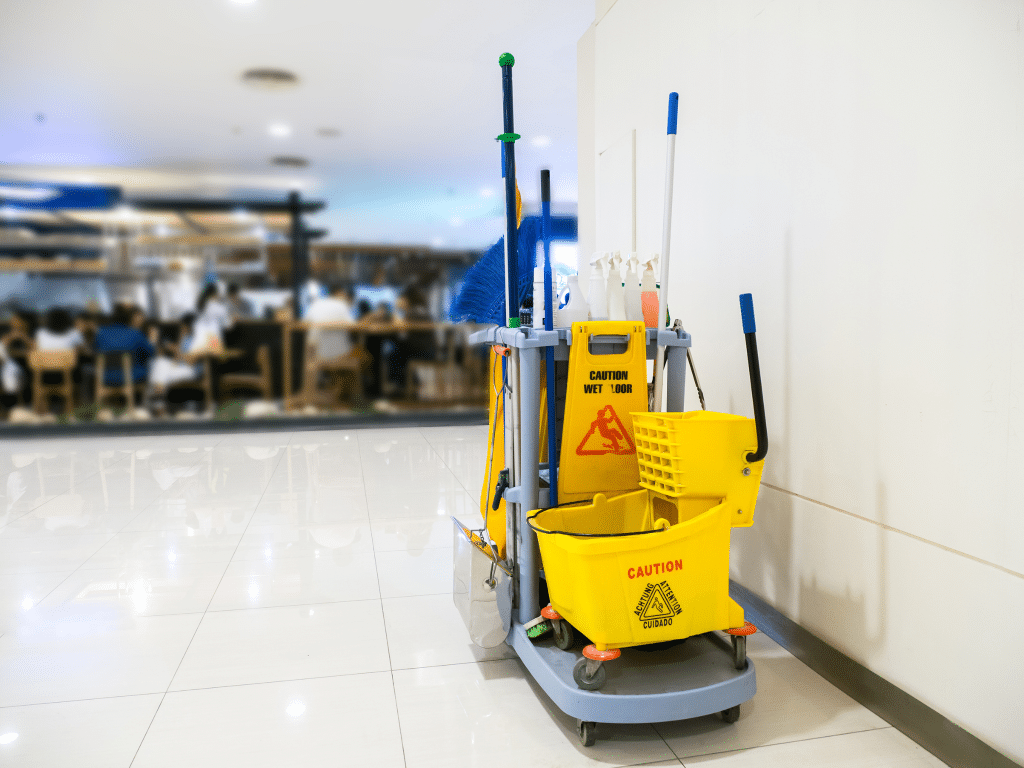
Cafeterias and other eating areas require a different approach, with a focus on food safety and hygiene. These areas need to comply with health and safety regulations, which often means more frequent and thorough cleaning.
Start by ensuring all surfaces where food is prepared or eaten are sanitised regularly. This includes not just obvious areas like tables and counters but also things like vending machines and microwave handles.
Floors in eating areas need special attention, too. Food spills can quickly become sticky messes if not cleaned promptly. Use quality cleaning solutions specifically designed for food service areas.
Don’t forget about proper waste management. Make sure that waste is removed frequently to prevent odours and pest problems.
Bathroom and Restroom Hygiene
Last but certainly not least, we come to bathroom and restroom hygiene. These areas are critical for maintaining overall facility cleanliness and preventing the spread of illness.
This was proven true in a study among primary schools to determine the prevalence of bacteria. Researchers found that in private schools, there were 220 colonies or bacterial strains on the toilet knob and 200 on the toilet flush. Public schools share the same high figures, with 360 and 340 bacterial colonies, respectively. (3)
Therefore, since there are different surfaces in these areas, each must have its own deep cleaning approach. Toilets need to be thoroughly disinfected, mirrors should be streak-free, sinks must be sanitised, and floors need to be mopped with a disinfecting solution.
Pay special attention to high-touch areas like doorknobs, flush handles, and faucets. These should be cleaned and disinfected multiple times throughout the day. This is especially important because a lot of germs and bacteria can be found on these surfaces.
Also, don’t forget about restocking essentials like soap, paper towels, and toilet paper. A clean bathroom isn’t very useful if it lacks these necessities!
Final Thoughts
Cleanliness in tertiary facilities is a huge endeavour but one that plays a fundamental role in healthy and productive learning. By applying the best practices mentioned in this article and addressing the facility’s unique cleaning needs, your education facility can maintain high hygiene standards.
However, your education facility may not have enough people to do all the cleaning work. If that’s the case, contacting professional educational facility cleaning services is the best idea. Professional Property & Cleaning Services (PPCS) is the leading provider of cleaning and facility management services to schools and tertiary education sectors for over 30 years. To get in touch, you can visit this page.
References
- “Sickness-related school absences to be targeted under government plan”, Source: https://www.nzherald.co.nz/nz/education/sickness-related-school-absences-to-be-targeted-under-government-plan/77CBKZWEVVBWZIKVNCSP4STAKU/
- “Catching Germs at School and in Sports”, Source: https://www.webmd.com/parenting/germs-at-school
- “Prevalence of Bacteria in Primary Schools”, Source: https://www.researchgate.net/publication/348147450_Prevalence_of_Bacteria_in_Primary_Schools#:~:text=Table%201.%20Microbial%20total%20counts%20produced%20from%20di%EE%84%ABerent%20sites%2C%20in%20the%20two%20schools